ONE DAY TRIP
JAŠIŪNAI – TURGELIAI – ŠALČININKAI
(trip length: 68,7 km)
JAŠIŪNAI (Jašiūnai Manor, the cemeteries of the Balinskis and Sniadetskis families, St. Anne’s Church) – BUIKAI VILLAGE (Lavender Port (by prior arrangement)) – VILKIŠKĖS (Vikiškiai manor) – MERKINĖ (Republic of Paulava) –TABARIŠKĖS (Church of Apostle Michael (the oldest in the district), barn, museum of folk painter Anna Krepštul) – MIKNIŠKĖS (Orthodox church) – TURGELIAI (church, Kobilinskis chapel (in the cemetery), local history museum (in the gymnasium)) – AKMENYNĖ (church) – ŠALČININKAI (Town Square, A. Mickiewicz Monument, Wagner Palace) – JAŠIŪNAI.
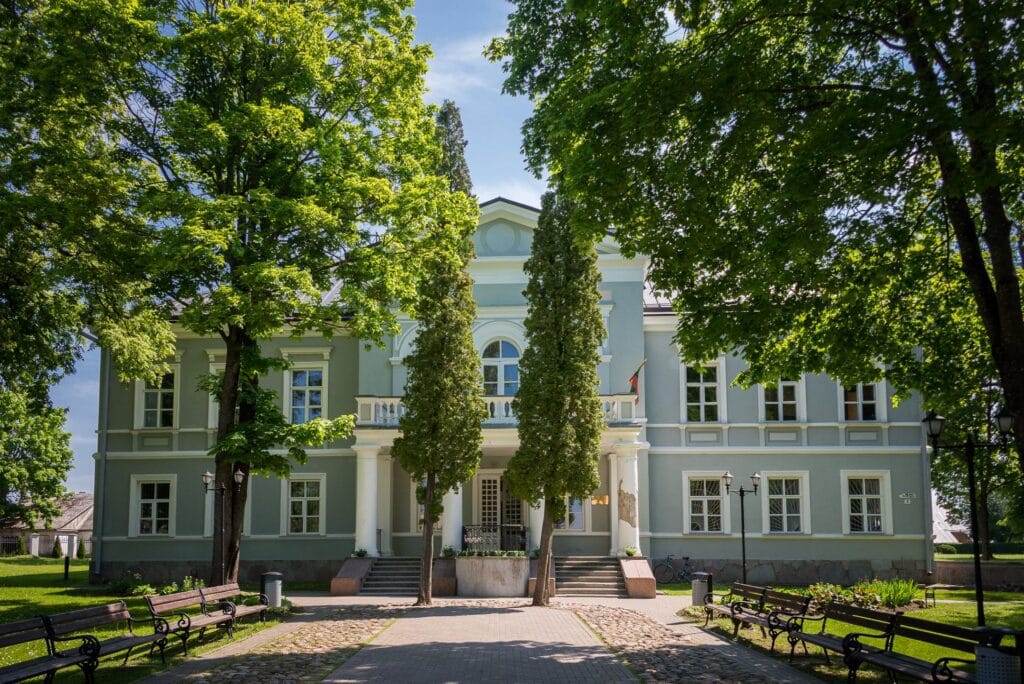
Jašiūnai manor
The settlement of Jašiūnai belonged to one of the most powerful and richest Lithuanian noble families at that time – the Radvilas – since 1402.In 1811, the Jašiūnai manor was bought from the settled Radvilas by Ignacas Balinskis. After his death, the manor passed to his younger son Mykolas Balinskis. In 1820, the Sniadecki family settled in Jašiūnai after he married Sofija Sniadeckytė, the daughter of Andrius Sniadecki, a professor at Vilnius University. Jašiūnai became even more popular when Professor Jonas Sniadecki, after his retirement as rector, decided to settle here with his brother’s daughter’s family. On the initiative and at the expense of Jonas Sniadecki, a magnificent late-classical palace was built in 1824-1828 according to the design of the VU architecture professor. Other architecturally valuable buildings of the former manor are the oficina, which was begun in the Classical style and extended in the so-called Historicism period. The stables are located away from the palace, with the gardener’s, gamekeeper’s and coachman’s quarters on the second floor. Next to the stables is a barn, a folk architecture building. After the death of Mykolas Balinskis, Jašiūnai was inherited by his son Konstantinas, and the last owners of the manor were Alexander and Anna Peresvet-Soltan of the Balinskis.

The cemeteries of the Balinskiai and Sniadeckiai families
A very valuable monument in Jašiūnai is the cemetery of the Balinskis and the Sniadecks, located in the forest in front of the palace, on the right bank of the Merkís River. Jonas Sniadeckis, the owner of the manor, was the first to be buried here in 1830. There are 18 burials in the cemetery. The most important of them are: J. Sniadecki (1756-1830), rector of Vilnius University, professor of astronomy and mathematics, M. Balinski (1824-1902), historian, Jonas Balinski (1824-1902), psychiatrist, professor at the St Petersburg Military Academy, and their relatives.
Šv. Annes church
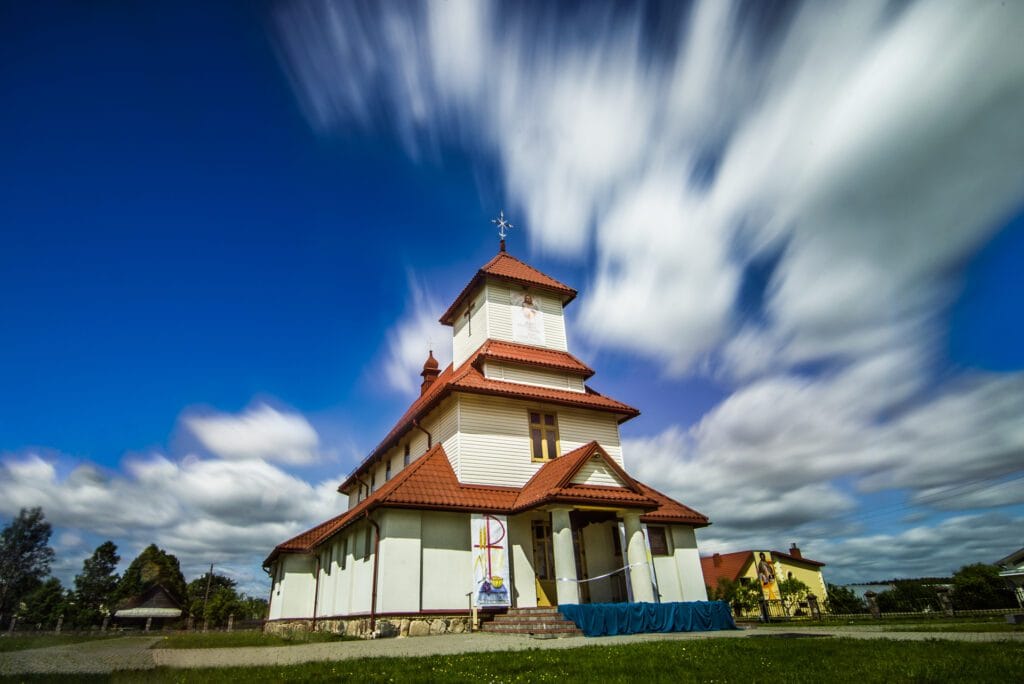
Jasiūnai St. St. Anne’s Church was founded in 1515. For some time it belonged to the Reformed Church – in 1640 it was plundered by the soldiers led by Prince Jonušas Radvila, and in the early 18th century it was burnt down by the Protestant Swedish army. Until the beginning of the 20th century, there was no house of worship in the town. However, chapels were built, and in the middle of the 19th century there was even a Dominican monk living in Jašiūnai Manor. But in 1866 the chapel was closed by the Tsarist authorities. It was not until 1929 that the three-aisled, single-aisled St. Nicholas Chapel was built. St. Anne’s Church. This modest wooden church is the centrepiece of Jašiūnai.
Levander port
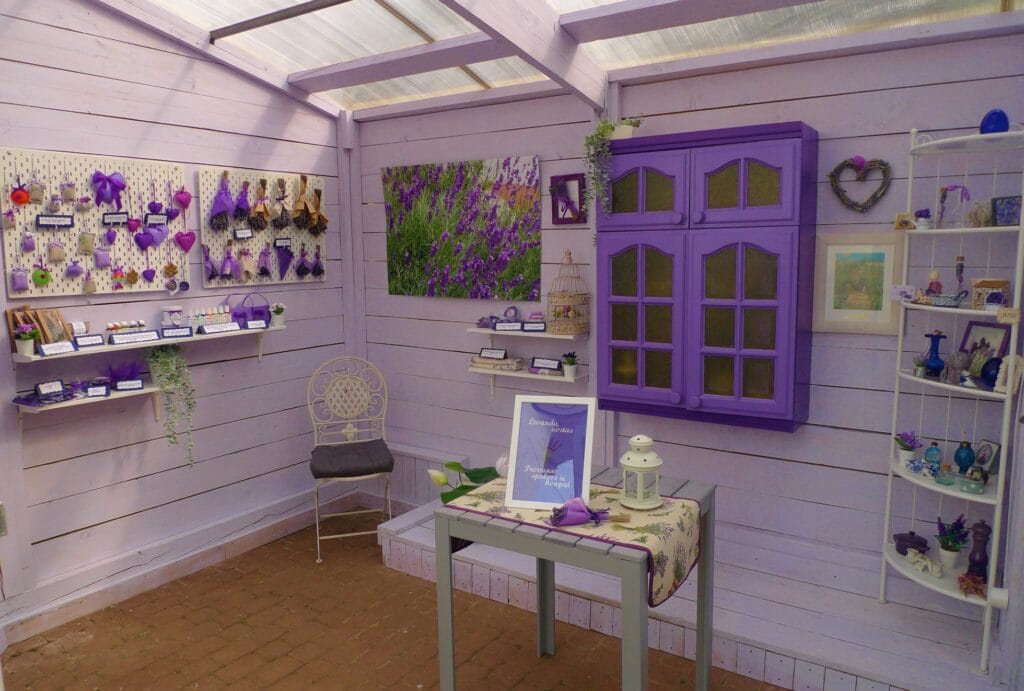
The fruit of the heart and mind of the family of Dan and Aurelija Arlauskas, founded in the village of Buikas. The first lavender bush was planted in 2013. Now there are 3000 lavender bushes, as well as cornflowers planted by the owners. At Lavender Harbour you will find peace, cosiness, warmth and lots of light. Both physical and spiritual… The cosy cottage is a delight for guests visiting the property, who can enjoy complete autonomy. If you wish to visit LEVANDŲ UOSTE, please contact us in advance by phone (+370) 687 16508 or by email paulavosrespublika@gmail.com
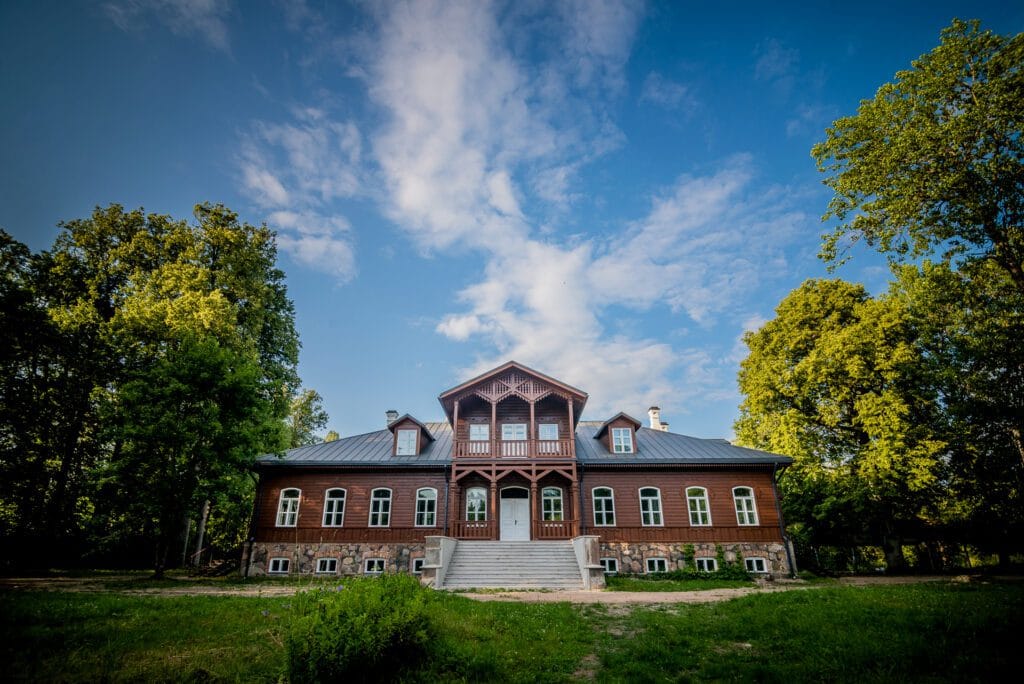
Vilkiškės manor
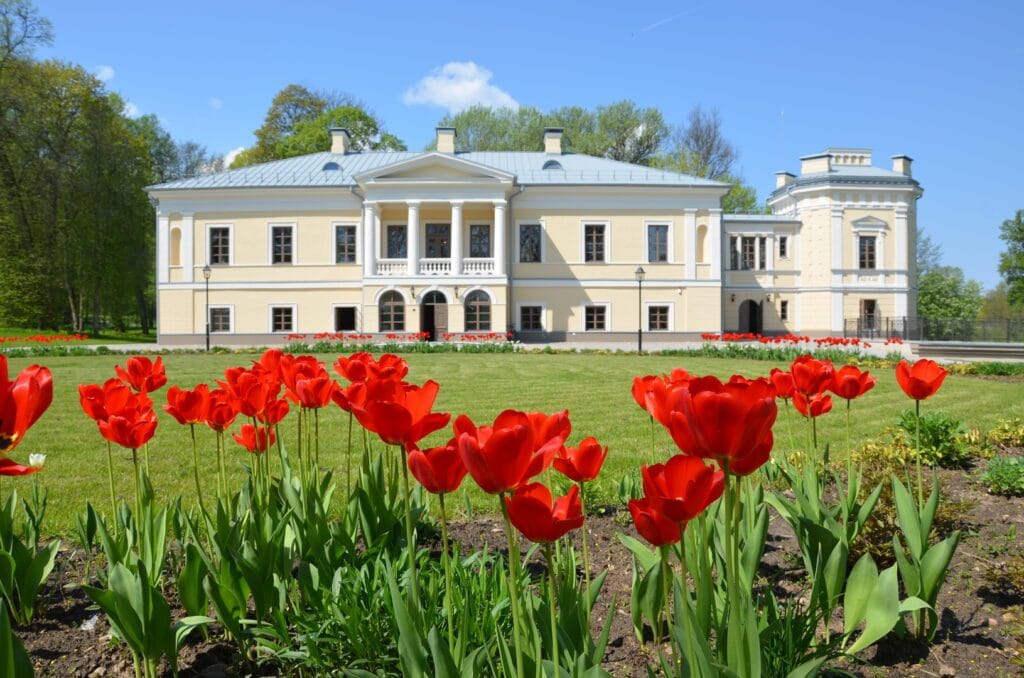
The wooden manor house in the Merkiai valley was built in 1847 by the noblemen Domochovskis. They added a mezzanine with a two-storey portico to the manor house, which was a rectangular, single-storey building on a high stone foundation. Each floor was supported by Greek columns, with wide staircases leading up to the house and wooden carvings cascading from the windows. The palace was surrounded by a park with avenues of lime and oak trees and majestic larches. But the Tsarist authorities confiscated the Domochovskis’ estate for their involvement in the 1863 uprising. During the Soviet era, there was a school here. Thanks to the efforts of the Šalčininkai District Municipality, the manor was renovated in 2015. A youth centre is planned for the future.
Republic of Paulava
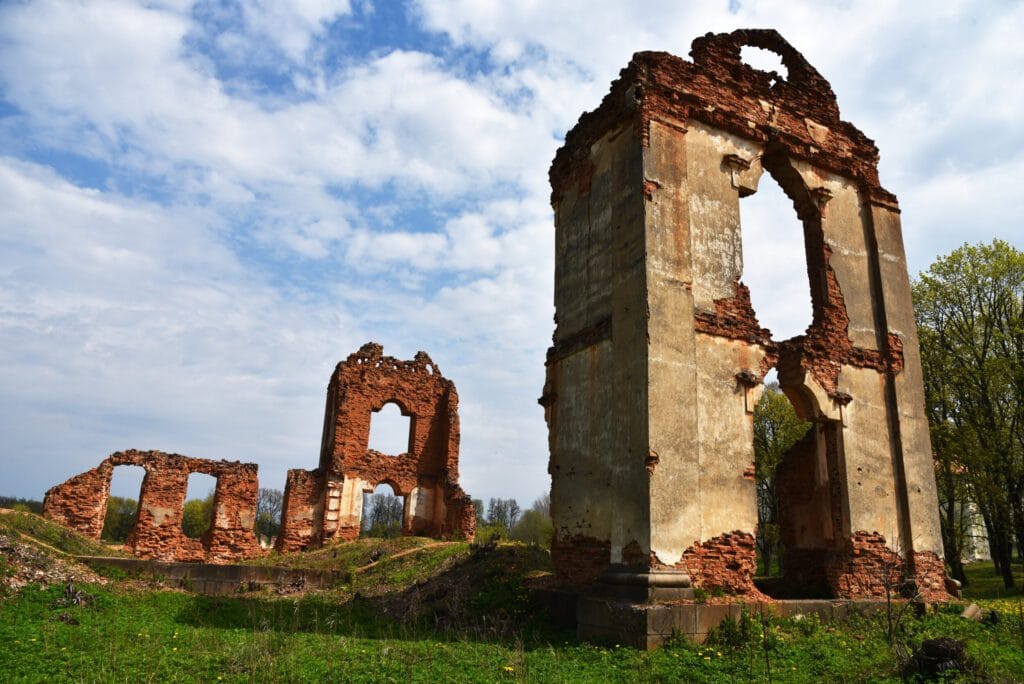
In 1767, the manor was bought by a young priest, Povilas Ksaveras Bžostovskis, who was a statesman of Lithuania and Poland at the time. After buying the manor and naming it after himself – the Republic of Pavlov – he started reforms: he abolished the lottery, distributed the land to the peasants and introduced a redemption tax. The republic had its own constitution, coat of arms, money, parliament, treasury, self-help cash, militia, doctor and school. The President of the Republic took care of the life, culture and education of the peasants; he himself wrote plays performed by his peasants and sent information about the life of the Republic to the newspapers of the time. The Republic lasted almost 30 years. Nowadays, its remains are one of the most attractive and important attractions of the school excursions, tourists and visitors to Šalčininkai district.
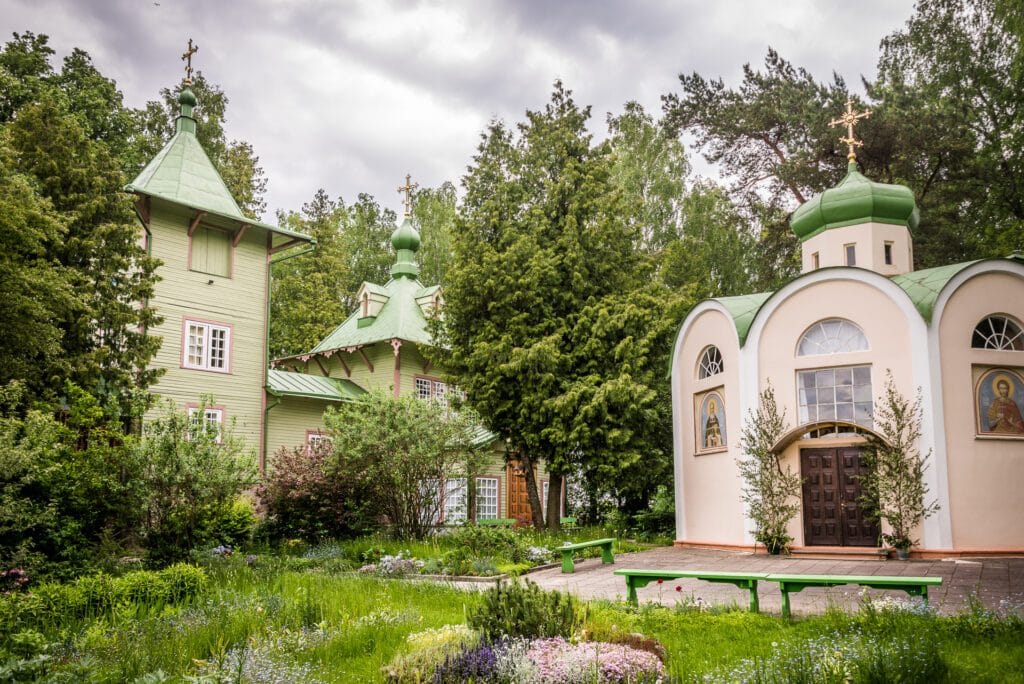
Mikniškės St. John of Kronstadt Chapel
The village of Mikniškės, known locally as Michnovo, has long been home to an exclusive Orthodox community. Miknishki is an old manor, mentioned since 1850. The community was formed in 1920-1922 on the Koretsky estate, when the priest Pontius Rupyshev succeeded in converting the three daughters of the landlord Osip Koretsky – Anastasia, Maria and Varvara – to the Orthodox faith. This is a unique Orthodox religious community, living in a rather closed environment, practicing agriculture, living “close to nature” and taking care of spiritual matters. The community has its own library and museum, which is worth visiting to hear stories from the locals. The village is adorned by the Orthodox Church of the icon of the Mother of God “Joy of All Who Sorrow” (built in 1917).
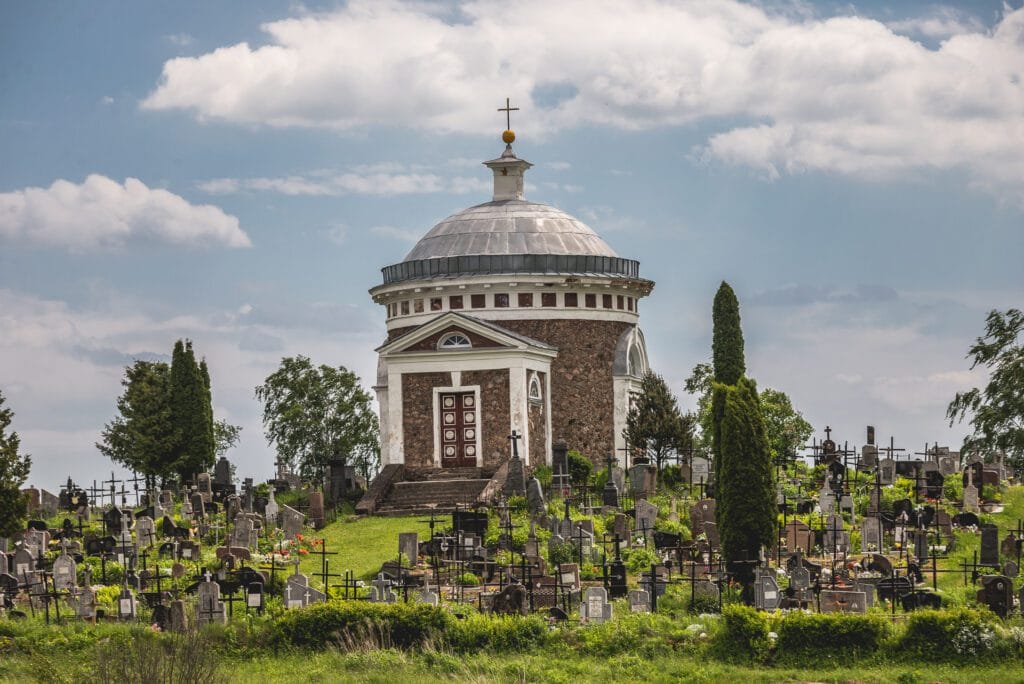
Kobilinskis chapel (in the cemetery)
It is a harmoniously shaped, classical building. It has a rotund tower with a dome and extensions on the sides. The chapel, which was built of fieldstones in 1850, still retains decorative elements inside, and in the 19th century it was decorated with a particularly large number of paintings and sculptures.
Church of Turgeliai
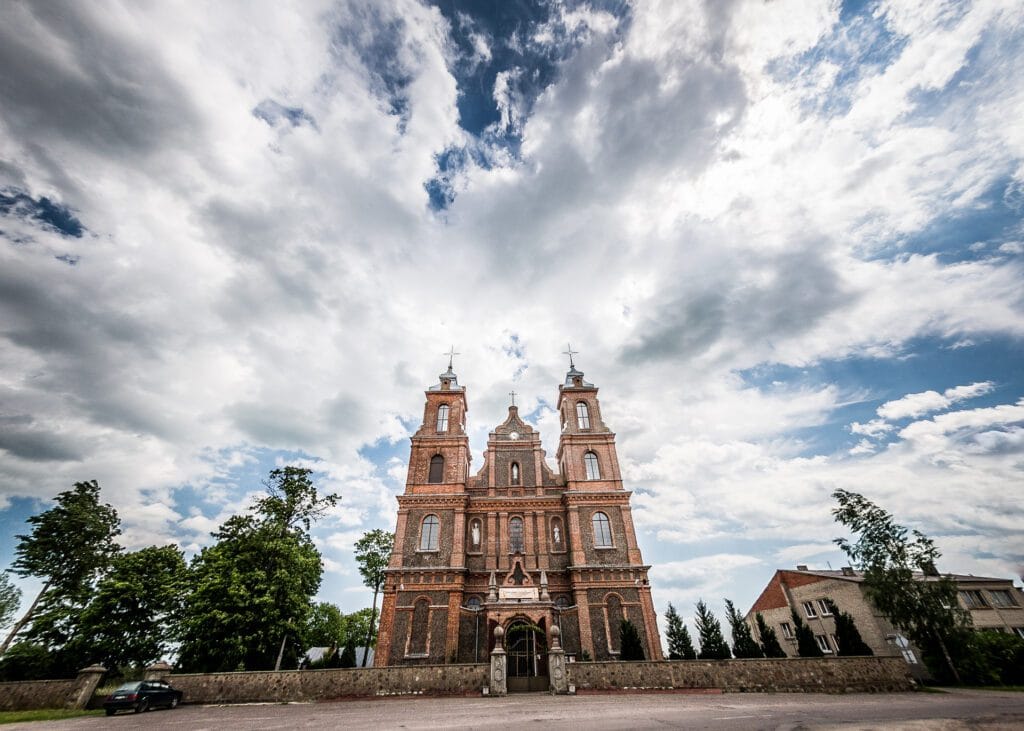
The first church in Turgeliai was built in 1511 by brothers Vaclav and Aleksandras Mangridas and Victor Gabrialovičius. The present Church of the Holy Trinity in Turgels was founded by the architect and architects of the church. The present Church of the Assumption of the Virgin Mary is made of brick, rebuilt in 1897-1909 according to the design of the architect Aleksey Polozov of the Vilnius Governorate. Polozov preserved most of the walls of the old church, raised two towers on the façade of the Trinave Church and created a new envelope of neo-Baroque architectural forms. In 1928-1930, the wall paintings were created by the artists Valdemar Kačinski and Skvarčinski, and the decoration was done by Konstantin Czarnecki. The compositions were painted in the vaults of the church, above the organ choir, as well as in the middle nave, above the pilasters, in the side aisles and in the presbytery. The church has preserved the furnishings from the first half of the 20th century, as well as paintings and sculptures and stained glass windows from the second half of the 20th century and the beginning of this century.
Museum of Local Lore (in the gymnasium)
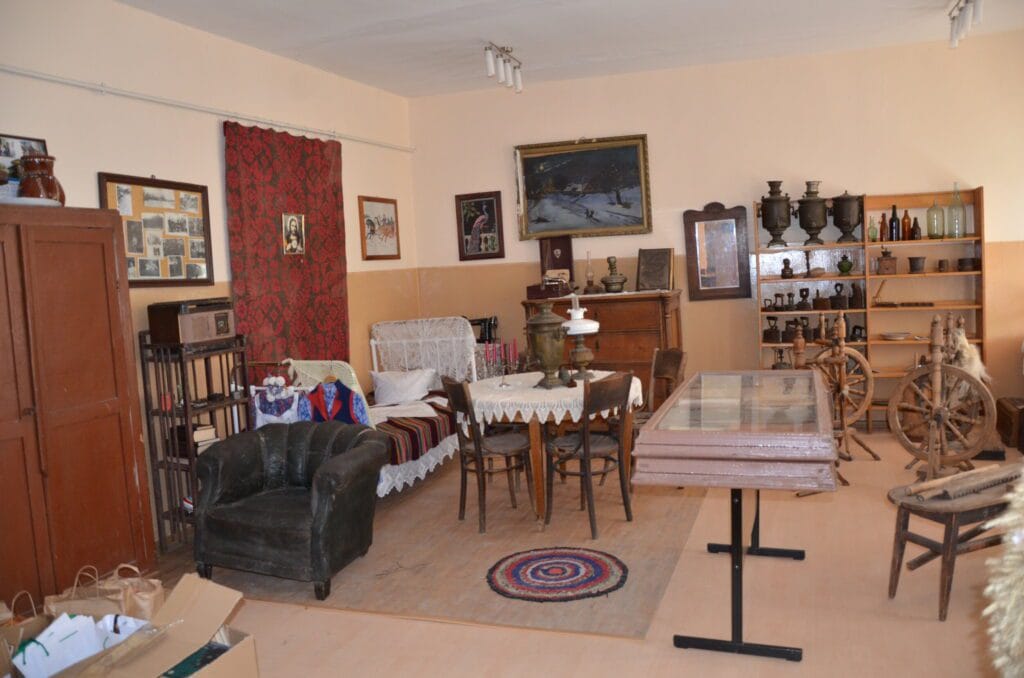
You can learn more about the glorious history of Turgeliai at the Pavlo Ksaveris Bžostovskis Regional History Museum in Turgeliai, which consists of 7 sections and contains about 3000 exhibits. The museum exhibits fragments of decorations, publications, documents and the Palace of the Pavlovian Republic. It displays folk household utensils and many other interesting objects related to the famous personalities who once lived in the vicinity of Turgeliai.
Opening hours. Tel. +370 (380) 41383
Apostle Michael Church
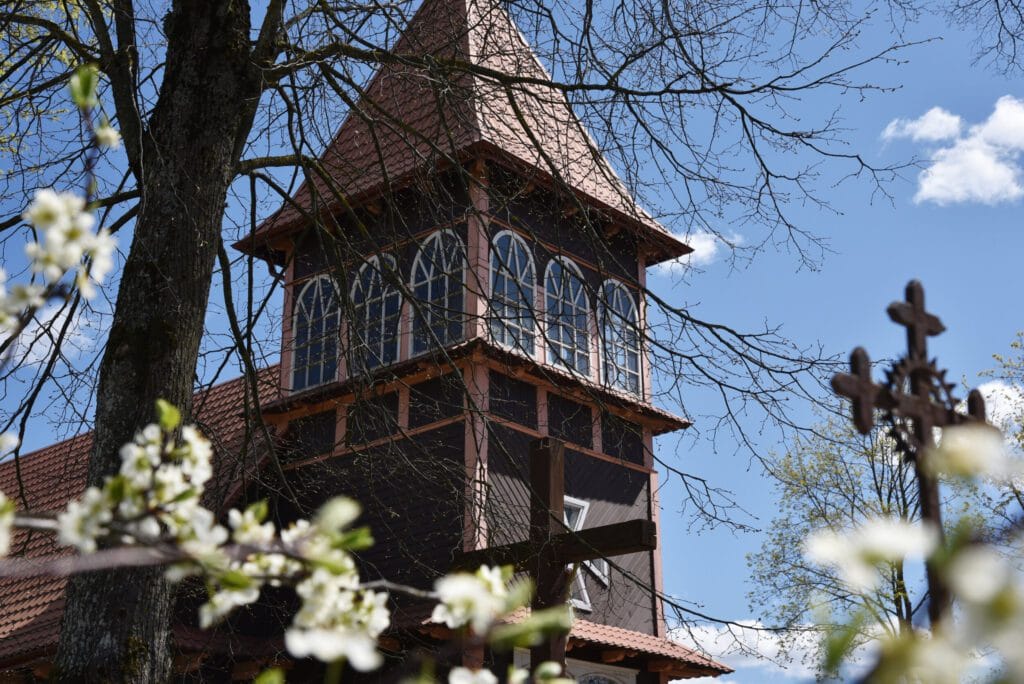
It is one of the oldest churches in the territory of Šalčininkai district. The church was built in 1770 by Lithuanian scribe Mykolas Skarbek-Važinskis. He settled the Carmelites of the Old Order next to the church, who took care of the parish school, the hospital and the poor shelter, which was established near the monastery in 1809. The church preserves the altars of the side aisles from the Carmelite period, decorated with wood carvings and mannered figures, and valuable easel paintings such as the Portrait of A. Važinskis, the Portrait of St. John the Baptist and the Portrait of St. John the Baptist. The paintings of St. Anne with St. Peter and St. Paul are also worthy of attention. St. Joseph, St. Mary and St. Joseph, and St. Mary’s portrait with St. Mary and St. Joseph. The painting of St. Joseph and St. Joachim, and the painting of Christ with a reed. There are also distinctive Baroque reliquaries, liturgical vessels, portable altars, a bell cast at the founder’s request at the beginning of the 19th century, and embroidered arnotes.

Museum of folk painter Anna Krepštul
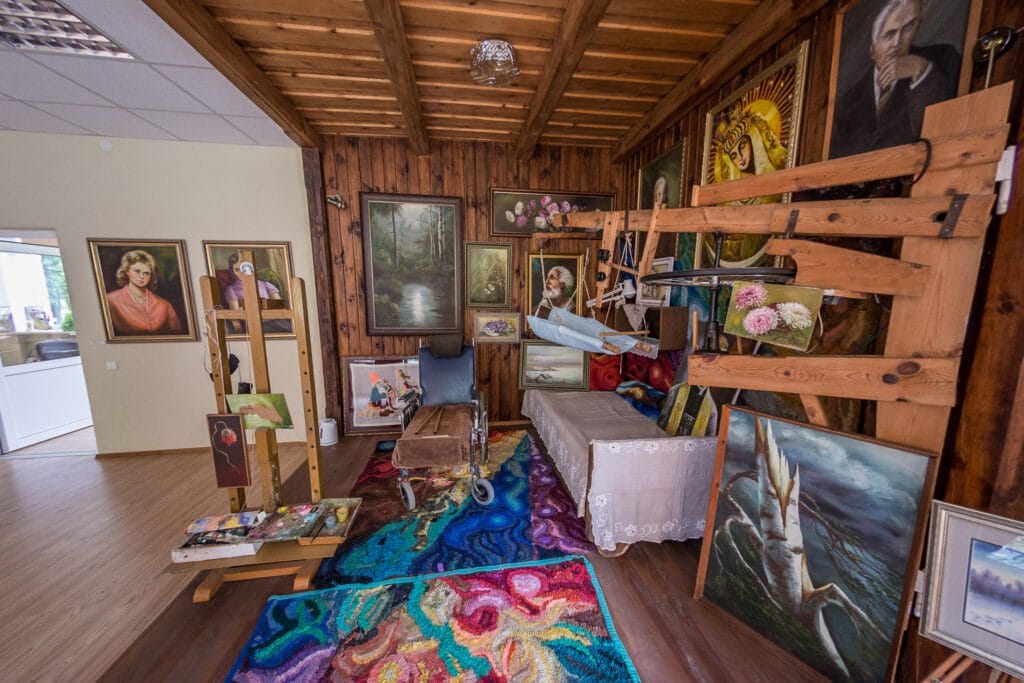
Ana Krepštul (1932-2007), a well-known folk artist in Lithuania and abroad, spent her entire life in her native village of Tabariškės. Since childhood, she was unable to walk due to illness. In the last years of her life, the artist did not get out of bed. God spared her health, but rewarded her with talent. Despite her illness, the self-taught artist painted over 3,500 paintings. Her works – portraits, still lifes, landscapes, sacred paintings – have been exhibited at various exhibitions, acquired by museums, private collectors and churches.
Church of St. Infant Jesus Teresa of Akmenynė
It was built in 1928 and services are held in Polish. It belongs to the Church of the Holy Trinity in Turgeliai. It belongs to the Parish of the Assumption of Mary.
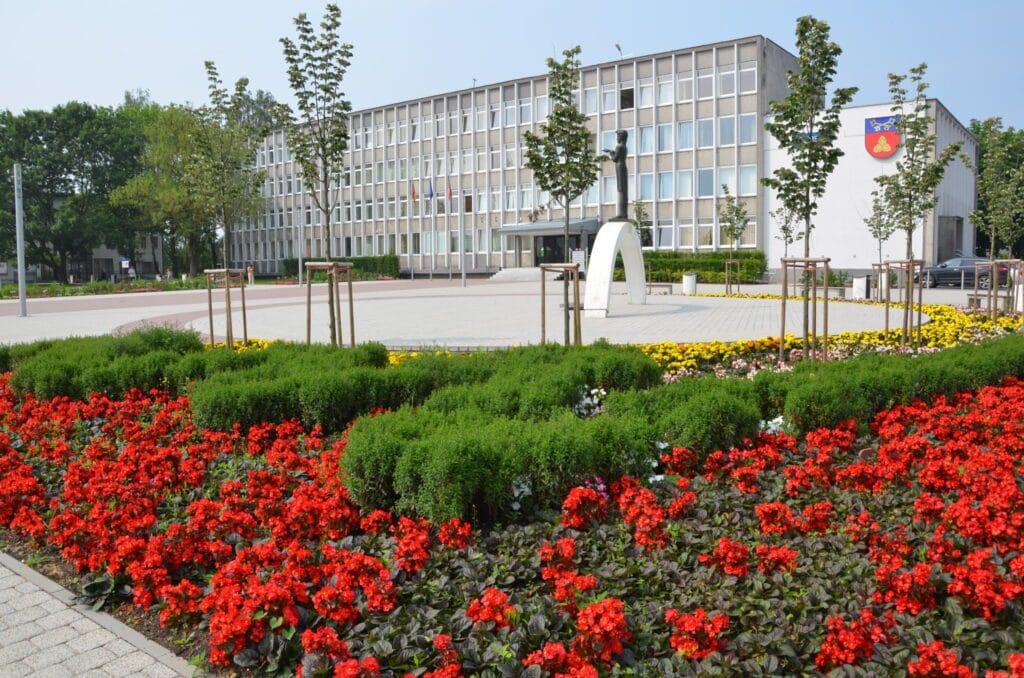
Šalčininkai
The centre of the district is Šalčininkai, a town 45 km from Vilnius, with a current population of 7000. The town is located on the Šalčininkai River, from which it gets its name. The first mention of Šalčininkai dates back to the 13th century in historical Crusader sources, where the place is called ‘Salsininken’ or ‘Saletzniken’. From the 14th century, the settlement belonged to the Glebavičiai family, later it was ruled by the noblemen Chodkevičius, and in 1823, Šalčininkai was bought by the Vagner family, who managed the area until the Second World War.
The main square of the town is decorated with a monument to the poet Adam Mickiewicz. It was created by Bronius Vyšniauskas. The monument was erected in 1998 to commemorate the 200th anniversary of the poet’s birth. In December 1998, the monument was unveiled at the Municipal Square. The one-and-a-half metre high bronze sculpture stands on a white pedestal symbolising a rainbow. It is inscribed with the last line of Mickiewicz’s ballad “Romantika” (‘Romantyczność’) in Lithuanian and Polish: “Miej serce i patrzaj w serce / Look with your heart into your heart”.
Wagner Palace
The most important cultural heritage site in Šalčininkai. The estate has been mentioned in written sources since the 14th century.The property rights were first held by the Glebavičiai family, then by the Chodkevičiai family, and from 1835 the estate belonged to the Vilnius pharmacists, Counts Martynas and Karolis Vagneris. In 1880, Vitoldas Vagneris built a two-storey Neo-Renaissance palace with two porticoes. The estate flourished especially between the wars, when Vitold’s son Karolis began to manage it. The Wagners’ farm was considered a model farm in the Vilnius region at the time. Foreign delegations were taken to the Vagneris farm. Inside the building, you can still see the excellent wood-burning stoves, and the so-called ‘golden hall’ is worthy of attention. The palace is now home to the Stanislav Moniuszko School of Arts.